GENERAL POLICY FOR SUSTAINABLE DEVELOPMENT
Outlines our commitment to acting responsibly and with transparency in social, economic and environmental aspects as the core of our sustainability strategy.

CLIMATE CHANGE

Climate change is one of the greatest challenges the world is facing today, requiring the commitment of governments, companies and society as a whole. Grupo México’s materiality analysis identifies climate change as one of the most relevant issues in our three divisions, forming the basis for our commitment to reducing our carbon footprint and to promoting energy efficiency.
Under our risk prevention approach, we are working to foster safe operations and communities that are resilient to climate change. We are also addressing the risks and opportunities associated with the transition to low-carbon economies.

Deliver products and services that support the transition to low-carbon economies

Reduce our carbon footprint

Increase the resilience of our operations and neighbor communities to the effects of climate change

Align our organizational management with international best practicess
For more information, see Management Approach

↓ 18 %
reduction in our emissions compared to the 2027 Business-as-Usual (BAU) target.

39.32 %
of the electricity consumed by Grupo México comes from renewable energy sources.

~595 ktC02e
Our renewable energy and energy efficiency projects avoid more than 595 ktCO₂e per year.

+1.2 million
In 2025, 1,293,171 trees were produced in the Company’s nurseries for reforestation and the subsequent sequestration of GHG emissions.
Our management in relation to this area is guided by:
Outlines our commitment to acting responsibly and with transparency in social, economic and environmental aspects as the core of our sustainability strategy.
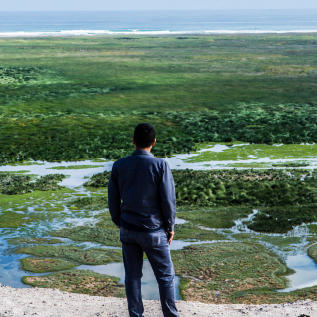
Outlines our commitment to driving development that is respectful of the environment to benefit everyone, today and tomorrow.
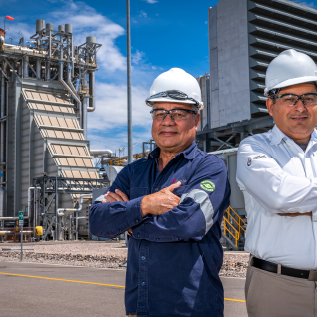
Outlines our commitment to promoting respect for the human rights of all our stakeholders.
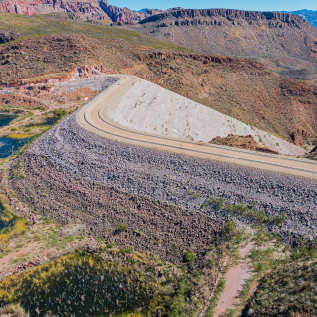
Outlines our commitment to ensuring our tailings systems are managed safely and responsibly.
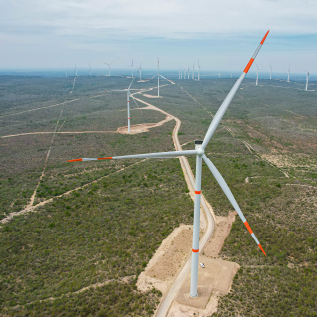
Outlines our commitment to adopting urgent measures to face climate change and its effects.
For further information, please refer to the ESG Policies section.
We recognize the importance of defining a strategic response to mitigate or offset the risks and impacts that climate change may have on our operations, value chain and our neighbor communities; therefore, we are contributing to national and international climate goals, including the Paris Agreement and United Nations Sustainable Development Goal 13: Climate Action.
We also expect that in the coming years, there will be an increase in the demand for products used in manufacturing clean technologies, products like copper.
Our response to climate change is built on four pillars:
Deliver products and services that support the transition to low carbon economies

At Grupo México, we work in sectors that are essential in the fight against climate change and in driving overall sustainable development.
Our Mining Division primarily produces copper, which is essential in the manufacturing of technological solutions that, collectively, have the potential to significantly reduce greenhouse gas emissions around the world. For example, electrically powered vehicles contain almost four times more copper than vehicles with internal combustion engines. Also, as a 100% recyclable metal that does not lose its properties when recycled. Copper facilitates the circular economy and helps preserve the environment.
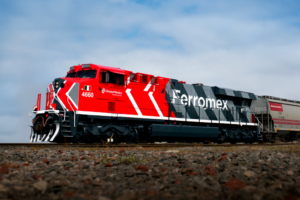
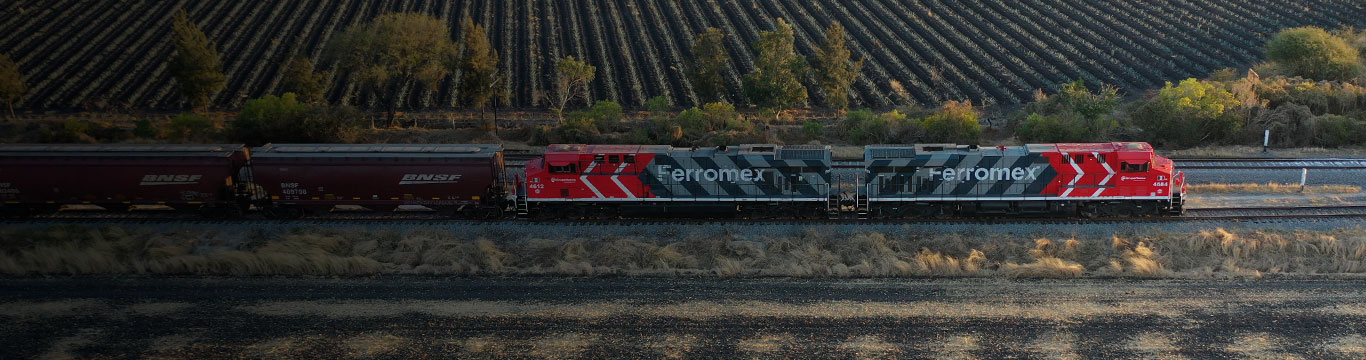
Our Transportation and Infrastructure divisions provide rail freight transportation solutions that generate nearly four times less emissions than trucking, and we are developing clean and renewable energy, engineering and construction projects.
The transition to a sustainable economy demands solutions that drive decarbonization and resource efficiency. Sustainable revenue reflects a company’s commitment to inclusive growth and strengthens its competitive position in a resource-constrained world. Here are some illustrative examples about our Sustainable Products Program for 2025 and our Sustainable Revenues for 2025 and 2024.
Reduce our carbon footprint

To transition to a low-carbon operation, we need to make substantial and sustained reductions in the greenhouse gas emissions produced by our various operations.
In this area, in 2022, we prepared a roadmap comprising the following areas:
Also in 2022, our renewable energy projects and energy efficiency prevented the emission of approximately 758,000 tons CO2e, projects like our El Retiro Wind Farm, and cogeneration projects and purchase hydroelectric power.
Additionally, our reforestation programs have contributed to reducing our carbon footprint, reforesting approximately 4,084 acres (1,653 hectares) with native plants. During 2025, Grupo México did not allocate capital expenditures to unabated carbon-intensive assets or products.
Energy Management Program
In the Infrastructure Division, we established the Energy Efficiency department pursuing the optimization of our site’s consumption patterns. Our commitment to shaping a sustainable business environment nourishes the importance of the projects evaluated by this team in the consolidation of Grupo México’s Decarbonization Strategy.
We have developed and implemented an energy efficiency tool across several segments of our businesses. This tool aims to establish baselines on which we measure, verify, and report the progress of energy, cost, and emissions savings projects.
During 2024 and 2025, we expanded the use of our energy efficiency tool, which is now implemented across various segments of the Group like Charcas, Buenavista del Cobre and METCO operations. During the first half of 2025 this tool was implemented and started collecting information in Santa Bárbara, and in the second half of 2025 we will be identifying in which other operations the tool can be implemented.
We also improved the accuracy of our electricity consumption measurements by installing more advanced monitoring systems. These new systems allow us to track energy usage in each of the previous business units in greater detail, which is essential for measuring, verifying, and reporting progress in energy savings, cost reduction, and emissions mitigation. Thanks to this tool, we are also able to more clearly detect discrepancies between sites, and focus our efforts on areas with the greatest opportunities for improvement. Analyzing these measured values also allows us to standardize energy consumption KPIs, while information repositories are created within the tool to facilitate consultation from any interested area.
The Energy Efficiency team evaluates, proposes, and ensures the execution of projects in coordination with Maintenance, Operation, and Climate Change departments. As part of this work, we conducted energy audits at several facilities to identify areas for improvement. These audits provide us with clear roadmaps to implement concrete actions in the short, medium, and long term. Currently, we have begun prospecting initiatives in Real Estate, Electricity Generation, O&G Platforms, Highways, and Mining operations.
Energy efficiency solutions proposed for these lines of business include options for correcting low Power Factor, foster on-site renewable generation, reduce thermal load inefficiencies, equipment start-stop optimization, and awareness campaigns for the responsible use of our resources.
In addition, we actively participated in international forums on renewable energy, energy efficiency, and hydrogen. These engagements have allowed us to continue learning, share experiences, and stay current with global best practices. For example, in collaboration with the Mining Division, we developed a project to replace diesel with solar energy in our electro-winning (SX-EW) operations at La Caridad mine.
As a next step, we will incorporate the management of other energy resources, such as fossil fuels, to further contribute to our decarbonization goals. This approach will allow us to extend our Energy Management System across all Grupo México operations.
Increase the resilience of our operations and neighbor communities to the effects of climate change

One of the key actions to strengthen the resilience of the Grupo México business model is to identify and manage the risks and opportunities related to climate change by analyzing climate scenarios, which we have been doing since 2020. As a result, we are incorporating factors related to climate change into our business decisions involving either risks (e.g., carbon taxes, increased costs related to climate management, physical impacts on operations) or opportunities (e.g., increased demand for copper, substitution of fossil fuels, implementation of low or zero emission technologies).
The scenarios were selected based on the 2017 guidelines of the Task Force on Climate-Related Financial Disclosures (TCFD).
We have also been building on recent efforts to understand, prevent and better address the risks associated with water management, both at our facilities and in the watersheds where we operate. In this regard, we regularly review and update our inventory of water-related risks, and also our plans to prevent and address these issues.
As a result, we have invested US$193.00 million in water management projects and others to mitigate incidents that could result from extreme rainfall. For example, we have been working on upgrading the water distribution network in cities near our operations, and we have designed, built and put into operation water treatment plants to optimize this resource. Additionally, our Buenavista del Cobre mine has designed a tailings storage facility that will support an extreme storm that would produce 20 million cubic meters (over 5 billion gallons) of water, which will prevent flooding and impacts downstream.
In 2023, we will be revising our analysis to consider the most recent scenarios recommended by the Intergovernmental Panel on Climate Change (IPCC) in their report (AR6).
The results of this new analysis will inform the calculations of potential financial impacts on our operations and our value chain in the medium and long term, and will also ensure we are meeting the increased market demand and, particularly, the new requirements expected from the Securities and Exchange Commission (SEC) on climate disclosures.
Align our organizational management with international best practices

We have strengthened our practices and reporting to provide our stakeholders with reliable quality information to objectively assess our contribution and performance:
Climate change related corporate goals:
 The goal has been met
 In progress
 Slight deviation from course
 The goal has not been met

Update our analysis of risks and opportunities related to climate change.
Increase the use of renewable electricity in the organization to 25%.
Mining: Reduce the Mining Division greenhouse gas emissions intensity by 5%.
Grupo México: Implement a climate risk adaptation plan at all sites.
Grupo México: Reduce BAU operational GHG emissions (Scope 1 and 2) by 15%.
Grupo México: At least 25% electricity from renewable sources, of our total consumption.
Grupo México: Reduce operational GHG emissions (Scope 1 and 2) by 35%..
Grupo México: At least 50% electricity from renewable sources of our total consumption.
Grupo México: Net zero Scope 1 and 2 GHG emissions.
Follow our annual progress in Corporate Sustainable Goals.
 5.78 MtCO2e
operational emissions in 2023
 -3.7%
-3.7%increase in operational emissions in 2023, compared with 2022
 52.5%
52.5%of our emissions come from the fuels our trains and mine trucks consume
 1.23 MtCO2e
annual emissions avoided with the consumption of renewable energy and energy efficiency measures
 0.25 MtCO2e
annual emissions will be avoided when the new Fenicias Wind Farm starts operations
 60%
60%of our GHG emissions are Scope 3
68,635,086 GJtotal fuel energy consumed in 2023
 + 0.37%
increase in fuel consumption in 2023, compared with 2022
 39%
39%proportion of natural gas consumed
 58%
58%proportion of diesel consumed
 7,245,856 MWh
total electricity consumed in 2023
 -1.2%
-1.2% 32.6%19.8%
 1,410
1,410hectares reforested in 2023
99.4%proportion of the total electricity consumed
 100%18,785,162 GJ
total fuel consumption in 2023
11,239 MWhtotal non-renewable energy consumed by our operations in 2023
30,492 MWh1,509 ktCO2escope 1 emissions in 2023
12.6 ktCO2e652 ktCO2eThe Mining Division’s Corporate Sustainable Development Department, and specifically the Chief Sustainability Officer (CSO), is responsible for the implementation of the Grupo México climate strategy, coordinating the related aspects of the three divisions. This Department regularly reports to the Audit and Company Practices Committee and also to the Executive Vice-President. In addition, Grupo Mexico has a Sustainable Development Committee at the Board Level of Southern Copper Corporation (SCC), which is made up of independent board members. The SCC Executive Vice-President, who is also the Executive Vice-President of Grupo México participates in this Committee. The Committee supervises the implementation of our climate change strategy, including the management of risks and opportunities associated with climate change and the transition progress.
During the first half of 2024, Chapter Zero held an information session aimed at the Directors of Grupo México and Southern Copper Corporation, to introduce the main concepts of climate governance based on the World Economic Forum´s eight principles for the effective implementation of climate governance. Additionally, climate risks and opportunities of mining, infrastructure and transportation industries were presented, as well as the fundamental role that copper represents for the energy transition.
Chapter Zero is a section of the Climate Governance Initiative and the World Economic Forum, which contributes to generating, facilitating and disseminating information, tools and good practices that will exclusively allow company directors to develop skills and capabilities necessary to manage climate risks, and at the same time, develop strategies that will contribute to moving towards a sustainable and carbon-neutral economy by 2050.
The organizational supervision of climate change management is structured as follows:
Executive Leadership / Board of Directors
Evaluates performance and progress on the corporate goals, targets and indicators, and investment projects related to climate change. Identifies areas of opportunity, needs, risks and potential synergies.
Audit Committee
Mechanism developed for the Board to monitor and promptly follow up on the management of our environmental, social and governance-related risks.
Sustainable Development Committee
Monitors the performance of our actions, makes executive adjustments, assesses the risks and opportunities associated with climate change, and submits strategic recommendations to the Board of Directors.
Sustainable Development Department
Leads the design and implementation of projects, initiatives and actions, in close collaboration with the other divisions and relevant areas of the company.
Climate Change Management
Oversees the execution of actions to address climate change, both at the Corporate level and in our three divisions.
Environmental Affairs Office
Leads the design and implementation of strategies and policies, assesses the effectiveness of the management system, and makes strategic adjustments for the consideration of the Corporate Sustainable Development Department and the Sustainable Development Committee.
Mining
Infrastructure
Transportation
Business units
We have environmental specialists at all our operations in each country, ensuring proper monitoring and reporting of our performance in energy and emissions.
We are committed to reporting with transparency our climate commitments and performance:
Management of our GHG emissions inventories
 We have been proactive in adopting best practices in our management approach. We have been reporting our corporate GHG emissions voluntarily under the Mexico GEI program since 2006 and we have been participating in the CDP Climate Assessment since 2016.
Calculation of our carbon footprint
 In 2019, we adopted an approach of operational controls at the corporate level and expanded the scope to include the use of refrigerants, as well as the current emission sources throughout the value chains (scope 3 emissions) of our three divisions.
Independent assessments
 The GHG emissions reported in our 2022 Sustainable Development Report are independently verified.
Backed by accepted methodologies
 The standards, methodologies, assumptions and calculation tools we use are aligned with the Corporate Accounting and Reporting Standard – Revised Edition and the Value Chain (Scope 3) Accounting and Reporting Standard supplement to the GHG Protocol, prepared by the World Resources Institute (WRI) and the World Business Council for Sustainable Development (WBCSD).
Approach of ongoing improvement
 With this new measuring approach, 2019 was set as the new base year for GHG emissions, serving as a reference for future measures and to set GHG emission reduction goals.
We prepare our GHG emissions inventories aligned with regulatory frameworks and conversion factors for the countries where we operate: