

GENERAL POLICY FOR SUSTAINABLE DEVELOPMENT
Outlines our commitment to acting responsibly and with transparency in social, economic and environmental aspects as the core of our sustainability strategy.

HUMAN RIGHTS

At Grupo México, we respect and promote the human rights of all our personnel, our neighbor communities and our suppliers and contractors, in adherence of the legal framework in the countries where we operate.
We are committed to establishing due diligence processes with 4 main groups to identify, prevent, mitigate and, where necessary, remediate potentially adverse impacts on human rights at all our operations.

Communities

Personnel

Suppliers

Security officers
For more information, see Management Approach

28 sites
Our Community Care Service is currently operating at 28 sites in the Mining and Infrastructure Divisions in Mexico, Peru and the United States.

GPTW
For the fifth year in a row, our Processing Plant (METCO) received “Great Place to Work” certification in 2025.

2 Codes
We have two codes of conduct for suppliers, one at the Grupo México level and a second for our Mining Division, both of which include human rights and ESG topics.

16,790 hours
Training hours delivered in 2025 on human rights-related topics.
Our management in relation to this area is guided by:

Outlines our commitment to acting responsibly and with transparency in social, economic and environmental aspects as the core of our sustainability strategy.
Outlines our commitment to promoting respect for the human rights of all our stakeholders.
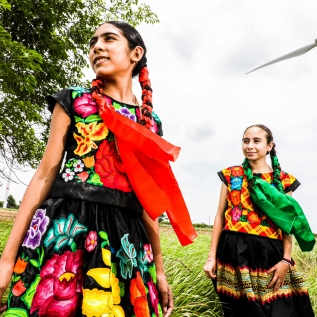
Outlines our commitment to respecting the rights of indigenous peoples and communities.
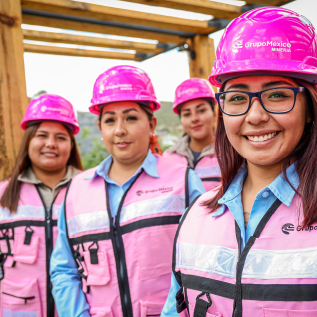
Outlines our commitment to being open to different ways of thinking and to fostering inclusive environments, free from discrimination and workplace or sexual harassment.
For further information, please refer to the ESG Policies section.
Human Rights Due Diligence Process
As part of our commitment to the United Nations Guiding Principles on Business and Human Rights, we have established comprehensive human rights due diligence processes to identify, prevent, mitigate, and, when necessary, remedy potential adverse impacts on our employees and local communities.
The due diligence methodology is applied consistently to four key stakeholder groups: local communities, company personnel, suppliers, and security providers. This approach is strengthened through participatory social diagnostics, where both men and women participate on equal terms which help identify and prioritize human rights risks specific to each operational context. These diagnostics are the basis of the Social Management Plans, which includes project designed specifically for women.
We maintain an open and permanent grievance mechanism through our Support and Attention Center (SAC), which serves as a two-way communication channel between the company and surrounding communities. This platform allows individuals to raise concerns, particularly those related to human rights, ensuring timely, confidential, and effective resolution.
Furthermore, we uphold strict policies and procedures to eliminate any risk of child labor, forced labor, human trafficking, or violations of freedom of association and collective bargaining. These policies are enforced across all operations and are aligned with applicable national regulations. In addition, Grupo México endorses and implements the Children’s Rights and Business Principles, developed by UNICEF, the UN Global Compact, and Save the Children, to ensure that business activities do not negatively affect children or vulnerable groups.
Our human rights management, through due diligence processes, focuses on 4 main groups:
Communities
 Mining and Infrastructure Divisions: we apply a human rights due diligence process in the communities where we operate during all phases of our projects: exploration, construction, operation and closure. We rely on our participative social diagnostics, management plans and our Community Care Service in these processes.
Personnel

Suppliers

Security Officers

Human rights related corporate goals
 The goal has been met
 In progress
 Slight deviation from course
 The goal has not been met

Implement a mechanism for external stakeholders near our Mining and Infrastructure division sites to submit grievances.
Due diligence process for critical suppliers, including ESG criteria. (Infrastructure)
Infrastructure: Human rights training for at least 90% of personnel.
Follow our annual progress in Corporate Sustainable Goals.
 100%
100%of our social diagnostics have been updated
 590
590cases received by our Community Care Service, with an average response time of 4 days
 8,421
8,421employees received human rights training
 6TH PLACE
awarded to our Processing Plant (METCO) in Sonora, making us one of the best places to work for women in Mexico in 2023 (Great Place to Work)
 0
0reports from our neighbor communities of human rights violations committed by private security officers contracted by the company
100%of our social diagnostics have been updated
12cases received by our Community Care Service, with an average response time of 4 days
1,045employees received human rights training
GPTWall companies in the Infrastructure Division have been certified as Great Place to Work
1,588new hires received human rights training
Our Human Rights Due Diligence process is designed to identify, prevent, mitigate, and address potential adverse human rights impacts across our operations and value chain. Detailed information is available in the Sustainability Actions Human Rights report for 2025.
We use the following instruments for each component of our due diligence processes:
Communities
 • Participative social diagnostics: tool that helps us to proactively identify potential risks of negative impacts on the human rights of our communities and to implement the corresponding measures.
• Management plans: where we define measures to prevent, mitigate or remediate any potentially negative effect, and also to maximize the positive impacts.
• Community Care Service (CCS): mechanism for open communication between the community and Grupo México, which informs us of any grievances or concerns from the community involving their human rights.
• Indigenous peoples and communities*: direct channels of communication at our stations and at the regional offices of the Department of Tourism through collaboration mechanisms established with the Chihuahua State Commission on Indigenous Peoples (in Spanish, COEPI).
• Communities*: direct and ongoing interaction with social actors and local authorities through interpersonal communication tools, and impact assessments in the case of infrastructure works. The main initiatives in this area are Dr. Vagón, The Health Train, and Mexicanos Sembrando.
• Migrant populations*: coordination with Mexican authorities, including the Ministry of Internal Affairs, the Mexican Immigration Office, and the Railroad Regulatory Agency, to prevent accidents involving migrants and to ensure the Mexican Immigration Office interacts directly with the migrants.
*applicable only in our Transportation Division.
Personnel
 • Workplace climate surveys: to determine the level of satisfaction and to hear the opinions of our employees on various aspects, including topics related to human rights. In the Mining Division, we have added perspectives on diversity, equity and inclusivity to inform our efforts to improve inclusivity.
• Reporting Line: essential component of our due diligence process in our three divisions, providing a mechanism for Grupo México personnel and suppliers to immediately communicate any violation of their human rights and to receive a report on how their grievance was addressed.
Suppliers
 For more information on our supplier screening and monitoring processes, see Supply Chain.
Security officers
 • Public Security Officers: we identify risks or threats that would require attention and define action plans to protect both people and facilities, producing regular reports with information from the security, legal and environment departments to establish preventive measures and actions.
We interact with local police forces to ensure the safety of our employees and to protect the assets of the Mining Division (only in Peru).
• Private Security Officers: in terms of private security, these officers operate only within the property limits at our Mining and Infrastructure division operations to protect our personnel and the operations, and have no contact with the community, which eliminates the risk of potential human rights violations.
Our due diligence processes and mechanisms are held to the following regulatory frameworks:
Mexico is a natural route for migration flows to the United States. Migrants who ride freight trains as a means of transportation put their safety at risk, as the physical and operating conditions of the freight cars are not designed to transport passengers. This is particularly relevant for our operations in central and southern Mexico, as well as near interchange points on the US-Mexico border.