
GENERAL POLICY FOR SUSTAINABLE DEVELOPMENT
Outlines our commitment to acting responsibly and with transparency in social, economic and environmental aspects as the core of our sustainability strategy.

OCCUPATIONAL HEALTH & SAFETY

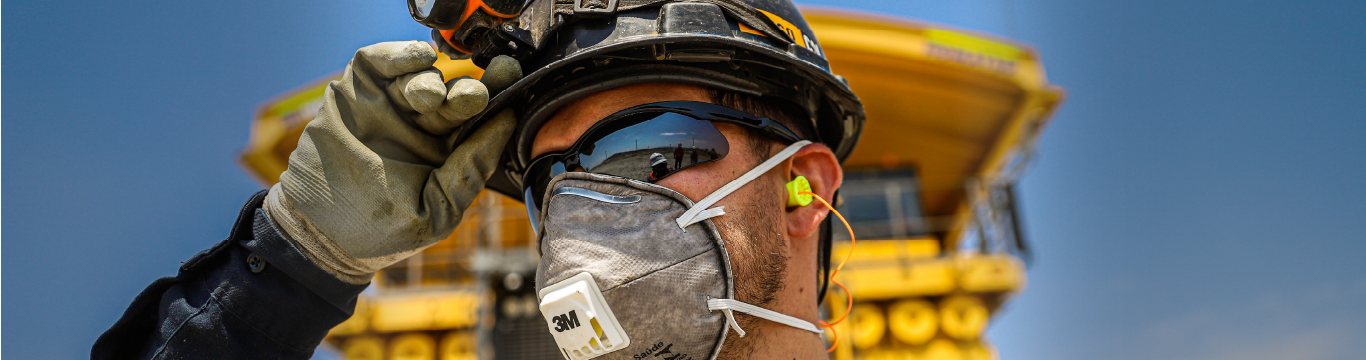
Personal health, safety and wellbeing is our priority both at and outside our operations. We provide a safe and healthy work environment for our personnel, contractors and suppliers by promoting a culture of prevention, identifying threats, minimizing risks, skill development and the ongoing improvement of our health and safety management systems.
Risk control
Performance review
Culture of leadership
For more information, see Management Approach
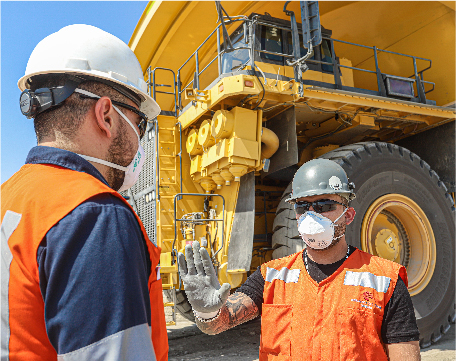

710 US$ million
invested in the health and safety of our personnel and contractors since 2018.

32%
reduction in workplace accidents over the last eight years.

100%
of our Mining Division operations (16) and of our Infrastructure Division construction and oil sites are ISO 45001 certified (60%).

8 unidades
of our Mining Division in Mexico received the ELSSA Program award for their safe and healthy workplace environments.
Our management in relation to this area is guided by:

Outlines our commitment to acting responsibly and with transparency in social, economic and environmental aspects as the core of our sustainability strategy.
Outlines our commitment to caring for the life, health and wellbeing of our personnel, contractors and stakeholders.
Outlines our commitment to business ethics and integrity for both company personnel and suppliers, who play an essential role in our corporate culture.
Outlines our commitment to promoting respect for the human rights of all our stakeholders.
For further information, please refer to the ESG Policies section.
Grupo México integrates comprehensive risk management into its operational and ESG practices, ensuring the identification, assessment, and mitigation of operational, environmental, social, and regulatory risks across all divisions. Please refer to our Risk Management process, where we disclose some ilustrative examples.
The management strategy of our Mining Division is defined through the 3 pillars of our culture of prevention:
Risk control
 We manage the risks associated with all our operational activities to detect, prevent, mitigate and remediate unwanted events that could affect our personnel and our interactions with the community. Our operational processes have a risk identification and control cycle.
Culture of leadership
 Fostering leadership and the active participation of our personnel is an ongoing effort by offering different training programs. We promote safe work environments through the personal and professional development of our operational and administrative personnel.
Performance review
 We have implemented various mechanisms for the ongoing improvement of our performance in safety, including communication channels to support our employees in reporting unsafe conditions or risks at their workplace, observation programs, and audits.
Occupational Health & Safety related corporate goals
 The goal has been met
 In progress
 Slight deviation from course
 The goal has not been met

Zero major or fatal accidents.
Include all employees in health prevention programs at our Mining Division operations in Mexico.
Reduce the lost time injury frequency rate1 by 25% in the Mining Division.
Implement a Behavior-Based Safety System in 75% of our Mining Division operations.
Register 100% of Mining Division personnel at our operations in Mexico exposed to (non-occupational) health risks in preventive health programs.
Obtain ISO 45001 certification for all Mining Division operations.
Implement a comprehensive traffic management plan at all our open pit mines.
Update the emergency response plans at our AMC operations.
Strengthen the safety competencies of personnel doing high-risk work.
Review compliance of contractor companies performing high risk activities with safety management systems and programs.
Maintain ISO 45001 certifications at all our operations.
Reduce lost-time work-related injuries (company personnel and contractors).
Reduce work-related health issues experienced by company personnel exposed at AMC operations.
Certify AMC safety and hygiene personnel in comprehensive safety and risk prevention.
Follow our annual progress in Corporate Sustainable Goals.
 0.65
0.65in 2023
0.67in 2023
 271,038
hours of safety training
 16
16operations are ISO 45001 certified
The organizational supervision of our occupational health & safety management in the Mining Division is structured as follows:
Executive Leadership /Board of Directors
Evaluates performance and progress on the corporate goals, targets and indicators, and investment projects related to occupational health and safety. Identifies areas of opportunity, needs, risks and potential synergies.
Audit Committee
Mechanism developed for the Board to monitor and promptly follow up on the management of our environmental, social and governance-related risks.
Sustainable Development Committee
Monitors the performance of our actions, makes executive adjustments, assesses the risks and opportunities associated with climate change, and submits strategic recommendations to the Board of Directors.
Sustainable Development Department
Leads the design and implementation of projects, initiatives and actions, in close collaboration with the other divisions and relevant areas of the company.
Occupational Health and Safety Department
Responsible for managing and implementing health and safety programs, initiatives and policies at all business units and operations.
Central Safety Committee (preventive services)
Made up of the heads or managers and superintendents of the different areas at the business unit. These committees meet monthly to review their activities, goals and safety indicators, and to propose improvement plans.
Safety and Hygiene Committee (Mexico), Joint Committee (Peru) and Formal Safety Committee (USA)
Made up of representatives for the company and the unions. Periodically, inspect unsafe acts and conditions in the different operational areas.
Department Safety Committee
Made up of the department heads in this area and their supervisors; review regulatory compliance, safety conditions, and propose improvement plans for problem areas.
Committees of supervisors and workers (Safety Cells)
Interdisciplinary teams made up of the supervisor and workers under their charge. Under the goal of safety at work, these teams identify hazards, and control the risks present in their day-to-day activities.
Health and Safety Committee
Made up of employees, 50% proposed by the union and 50% proposed by management. These committees meet once a month to identify and mitigate hazards related to unsafe conditions detected during inspection visits.
At the Mining Division of Grupo Mexico (including all SCC business units), we maintain our Occupational Health and Safety Management System certified under the ISO 45001 standard across all our operations.
This system guides the identification of hazards and the assessment and prioritization of risks using recognized methodologies, including risk matrices aligned with national and local regulatory frameworks in the countries where we operate (Mexico, Peru, and the United States). The risks with the highest severity are incorporated into our Critical Risk Registry, which is managed in accordance with the International Council on Mining and Metals (ICMM) Health and Safety Critical Control Management guidance to ensure more timely and effective follow-up.
Based on these assessments, each operation sets quantitative targets and action plans to reduce and/or control the identified critical risks. These are monitored through key performance indicators that include, among others: incident rates, health, hygiene, emergency preparedness, contractor management, and behavioral safety. The evaluation of progress against these targets is ongoing and reinforces our goal of preventing incidents and health-related impacts.
We have implemented various mechanisms for continuous improvement of our safety performance, such as communication channels to facilitate reporting of unsafe or risky conditions in the workplace by our employees, observation programs, and audit sessions. We integrate them under the following categories:
Informational mechanisms
Tols and channels created to receive reports and to disseminate messages to raise awareness for prevention among employees:
• Communication campaigns: dissemination of messages to promote accident prevention in the workplaces..
• Complaint and suggestion box: direct and safe line of communication to report irregularities by email.
• Near miss reports: reports of incidents that do not result in, but have the potential to cause, injuries or health concerns. These reports inform the ongoing improvement of prevention processes.
• Reporting Line: direct and safe line of communication to report irregularities by phone.
• 5-Minute talks: to raise awareness and highlight the importance of safety. Held at the beginning of each workday or before starting any activity.
• WhatsApp reports: digital media to communicate unsafe events and conditions detected at our operations. Unit supervisors and superintendents participate in the chats to respond and address the reports received.
• SISSEI personal contact reports: feedback reports with employees on activities and procedures, focusing on continuity or correcting processes.
• Health and Safety week: annual event to raise awareness among employees and their families on safety, health and hygiene through informational talks, conferences and activities.
Observation and monitoring mechanisms
 They consist of practices and committees created for the periodic evaluation of work environments and conditions, such as:
• Safe shift cards: tool used to prevent injuries by evaluating different aspects prior to starting work, including preparedness, working conditions, equipment and safe work procedures.
• Visits by Workplace Health & Safety personnel: conducted to verify the level of compliance with each element of the Workplace Health and Safety Management System and to follow up on action plans.
• Inspections by supervisors and superintendents: conducted to ensure worksite conditions are safe and healthy.
• Safety and Hygiene Committee: made up of company and employee representatives. Provides recommendations for prevention and ensure compliance with government workplace health and safety regulations.
Monthly schedule of inspection visits and meetings, from which a report is produced and submitted to Management and to the unions, noting the areas for improvement in employee health and safety.
Participates in incident investigations and follows up on the implementation of preventive measures, continually strengthening the safety programs at each operation.
Assessment mechanisms
 Practices that focus on evaluating the fulfillment and performance of our health and safety strategy, tailored to each division:
• IPERC Tool: tool to identify work-related hazards and risks in a timely manner, and to determine actions (controls) to prevent injuries or occupational diseases, and raise awareness among personnel.
• Crossed audits: reviews conducted by a team of auditors from another operation to foster the exchange of good practices and generate recommendations to minimize employee exposure to risk factors.
• Corporate inspections: Safety Department personnel conduct regular visits to our operations to follow up on the different institutional programs and Health and Safety initiatives.
The Occupational Health & Safety strategy of our Infrastructure Division focuses on three pillars:
People
 People are the reason for our occupational health and safety management systems; therefore we are constantly working to instill safe habits and safety awareness in our employees and contractors in their day-to-day activities, interactions with their coworkers and in our communities.
Workplace environments
 We invest in preventive maintenance for fire equipment, physical protection barriers against electrical currents, grounding, and other equipment to prevent or control potential incidents that could threaten the lives of our personnel.
Management systems
 We focus on developing and implementing the controls necessary for our operations to be safe and to prevent personal injury and damage to equipment or the environment.
Occupational Health & Safety related corporate goals
The goal has been met
In progress
Slight deviation from course
The goal has been met
Maintain a zero fatal accident rate.
Zero fatalities of company personnel or contractors.
Reduce our lost time injury frequency rate by 40%.
Increase preventive health programs by 30%.
Monitor the health of vulnerable personnel.
ISO 45001 certification for our 5 active lines of business.
Align 100% of the organization to the Centinela de la Seguridad program, focused on changing behaviors.
Follow our annual progress in Corporate Sustainable Goals.
0.53in 2023
115,927hours of safety training
 60%
60%of our Construction and Oil sites are ISO 45001 certified
The organizational supervision of our occupational health & safety management in the Infrastructure Division is structured as follows:
Executive Leadership / Board of Directors
Supervises and audits performance, policies and progress on the corporate goals and targets, and the implementation of our management systems.
Corporate Office Safety Committee
Multidisciplinary team made up of union and administrative personnel to promote safe and healthy spaces at our workplaces.
Safety Managers
Implement the health and safety strategy, continually monitoring performance and identifying areas for improvement.
Coordinators and Supervisors
Oversee employee compliance, and also the implementation of the strategy, supervising unsafe acts and conditions.
We have implemented various mechanisms for continuous improvement of our safety performance, such as communication channels to facilitate reporting of unsafe or risky conditions in the workplace by our employees, observation programs, and audit sessions. We integrate them under the following categories:
Informational mechanisms
Tols and channels created to receive reports and to disseminate messages to raise awareness for prevention among employees:
• Communication campaigns: dissemination of messages to promote accident prevention in the workplaces..
• Reporting Line: direct and safe line of communication to report irregularities by phone.
• 5-Minute talks: to raise awareness and highlight the importance of safety. Held at the beginning of each workday or before starting any activity.
• WhatsApp reports: digital media to communicate unsafe events and conditions detected at our operations. Unit supervisors and superintendents participate in the chats to respond and address the reports received.
• Health and Safety week: annual event to raise awareness among employees and their families on safety, health and hygiene through informational talks, conferences and activities.
Observation and monitoring mechanisms
They consist of practices and committees created for the periodic evaluation of work environments and conditions, such as:
• Visits by Workplace Health & Safety personnel: conducted to verify the level of compliance with each element of the Workplace Health and Safety Management System and to follow up on action plans.
• Inspections by supervisors and superintendents: conducted to ensure worksite conditions are safe and healthy.
Assessment mechanisms
Practices that focus on evaluating the fulfillment and performance of our health and safety strategy, tailored to each division:
• Safety Indicators: digital tool that measures more than 20 different indicators, which allows visualizing the contribution of the actions carried out to reduce accidents and strengthen occupational safety. The Corporate monitors this tool for a review of the applicable Mexican regulations, as well as the associated indicators.
At Grupo México Transportes, safety is one of our fundamental strategic focus areas to guarantee excellence in our services and the wellbeing of our personnel, customers and contractors. The Transportation Division is held to the Grupo México Occupational Health & Safety Policy, which affirms our commitment to providing safe workplace environments and an organizational culture where accident prevention and risk identification are key aspects in our operation.
Potential risks
 Associated with our industrial activities.
Employee behavior
 We apply the following tools with our employees to implement and evaluate the Occupational Health and Safety system:
Occupational Health & Safety related corporate goals
The goal has been met
In progress
Slight deviation from course
The goal has not been met
Zero fatal accidents.
Reduce our lost time injury frequency rate by 15%.
Install equipment at 40 level crossings to prevent accidents in urban and rural areas.
Reduce our lost time injury frequence rate by 15%.
Reduce our reportable workplace incidents by 20%.
Reduce incidents at level crossings by 15%.
Follow our annual progress in Corporate Sustainable Goals.
2.13in 2023
 0.04
0.04in 2023
595,689hours of safety training
The organizational supervision of our occupational health & safety management in the Transportation Division is structured as follows:
Executive Leadership / Board of Directors
Reviews health and safety performance reports and incidents quarterly.
Senior Management
Responsible for our health and safety management performance.
Projects & Planning Office
Manages and supervises the health and safety of our employees at each operation.
Occupational Health and Safety Department
Has a trained team to address health and safety-related issues, and defines the preventive mechanisms to address incidents and operational safety.
We have implemented various mechanisms for continuous improvement of our safety performance, such as communication channels to facilitate reporting of unsafe or risky conditions in the workplace by our employees, observation programs, and audit sessions. We integrate them under the following categories:
Informational mechanisms
Tols and channels created to receive reports and to disseminate messages to raise awareness for prevention among employees:
• Communication campaigns: dissemination of messages to promote accident prevention in the workplaces..
• Complaint and suggestion box: direct and safe line of communication to report irregularities by email.
• Near miss reports: reports of incidents that do not result in, but have the potential to cause, injuries or health concerns. These reports inform the ongoing improvement of prevention processes.
• Reporting Line: direct and safe line of communication to report irregularities by phone.
• 5-Minute talks: to raise awareness and highlight the importance of safety. Held at the beginning of each workday or before starting any activity.
• Health and Safety week: annual event to raise awareness among employees and their families on safety, health and hygiene through informational talks, conferences and activities.
Observation and monitoring mechanisms
They consist of practices and committees created for the periodic evaluation of work environments and conditions, such as:
• Visits by Workplace Health & Safety personnel: conducted to verify the level of compliance with each element of the Workplace Health and Safety Management System and to follow up on action plans.
• Inspections by supervisors and superintendents: conducted to ensure worksite conditions are safe and healthy.
• Special Safety Committee: made up of company and employee representatives. Provides recommendations for prevention and ensure compliance with government workplace health and safety regulations.
Monthly schedule of inspection visits and meetings, from which a report is produced and submitted to Management and to the unions, noting the areas for improvement in employee health and safety.
Participates in incident investigations and follows up on the implementation of preventive measures, continually strengthening the safety programs at each operation.
Assessment mechanisms
Practices that focus on evaluating the fulfillment and performance of our health and safety strategy, tailored to each division:
• Safe performance audits: regular reviews conducted by Health and Safety personnel.
• Effective audits: strategy to foster and consolidate a culture of accident prevention, using a cascading evaluation process for each area of the organization.